Skip to content
Unit 2a Ellis Grove, Beeston NG9 1EP Cars and vans, petrol and diesel 4.9 out of 5 from 58 on Google

One job, photographed properly

A Ford Focus EcoBoost wet timing belt, done over a weekend. These are the garage's own photographs of that car, in order, from the parts on the floor to the sump going back on. Nothing here is a stock picture of somebody else's workshop.

Why a wet belt is a bigger job than a cambelt

A conventional cambelt runs dry, behind a cover on the front of the engine. A wet belt runs inside the engine, in the oil. As it ages it sheds material, and that material goes where the oil goes: into the sump and towards the oil pickup, which is the strainer the oil pump draws through.

So the belt is only half of it. Doing the job properly means dropping the sump, taking the pickup out and cleaning both, which is what the photographs below show. A quote that only covers the belt is cheaper because it is a smaller job, not because it is better value.
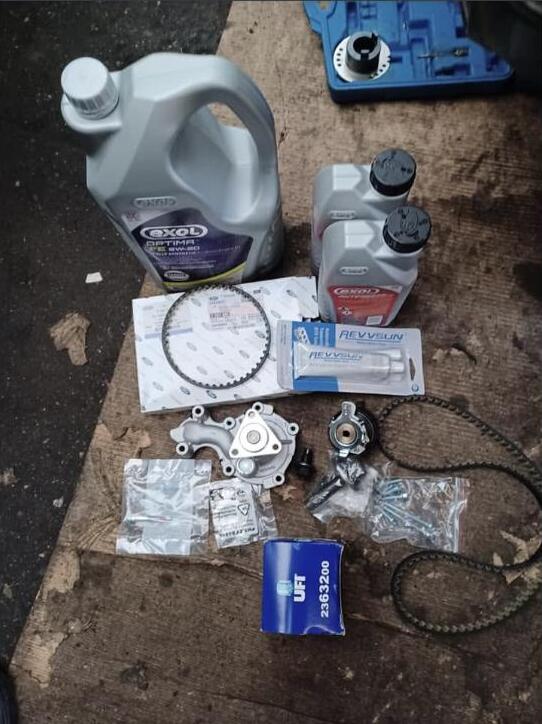
The parts for a wet timing belt job laid out on the workshop floor: a can of Exol Optima 5W-20 oil, two smaller bottles, a new toothed belt, a water pump, an oil filter, a tube of sealant, bagged bolts and a blue case of engine timing tools.
Everything that goes on before the car is touched. Belt, water pump, filter, sealant, bolts and the timing tool set for this engine.
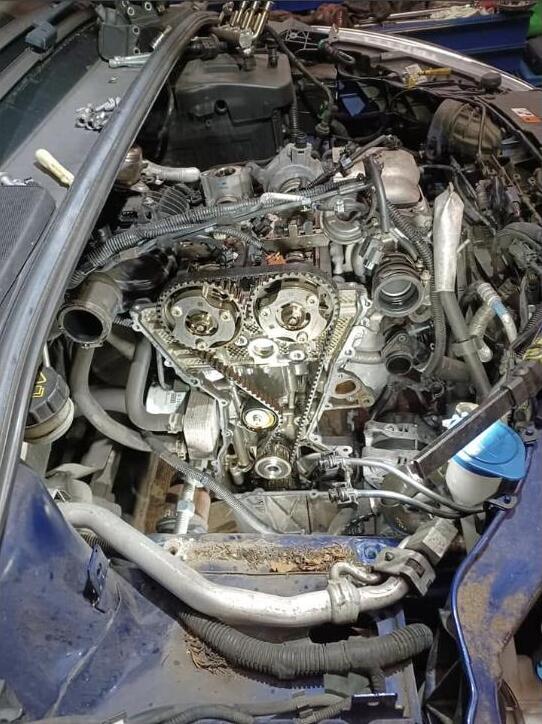
The front of a blue car's engine with the covers off, the camshaft sprockets and timing case exposed, pipework and wiring pushed aside around it.
The front of the engine stripped back far enough to reach the belt.
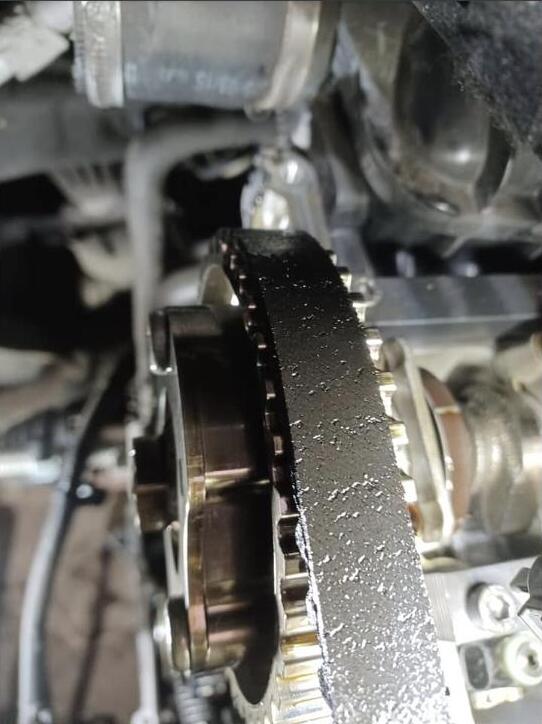
Close up of the old timing belt still on its sprocket, the black rubber shiny with oil and visibly shedding flakes of material along its back.
The belt that came off. A wet belt runs in the engine oil, and this is what shedding looks like before it blocks anything.
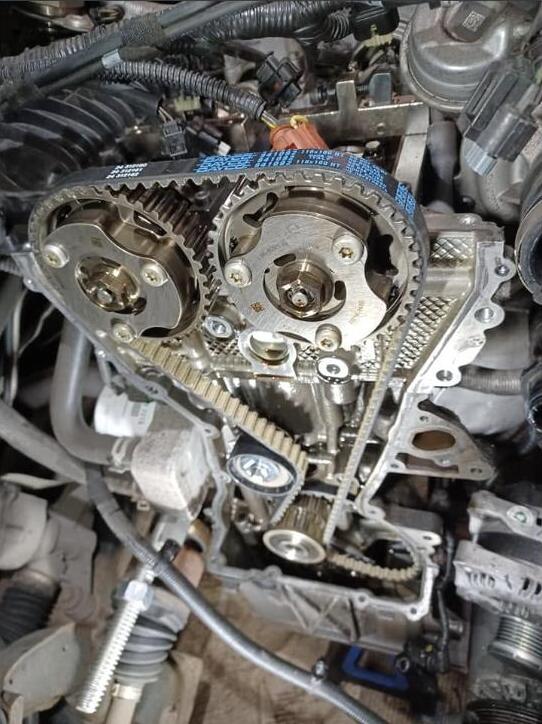
The new blue-marked timing belt fitted around both camshaft sprockets and the lower gear, with the white timing marks on the belt lined up against the sprocket marks.
The new belt on and timed. The white marks printed on it line up with the marks on the sprockets, which is the whole job in one photograph.
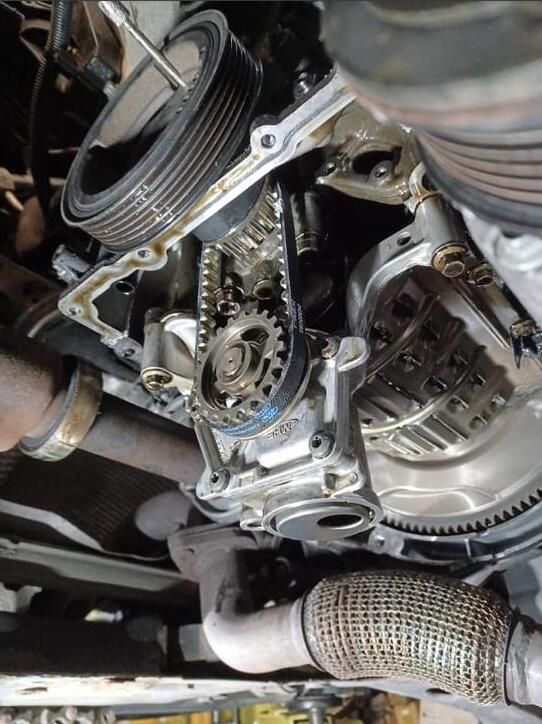
The lower end of the engine seen from underneath, showing the crankshaft sprocket, the new belt running down to it, the oil pump housing and the auxiliary belt pulley above.
The bottom of the belt run, reached from underneath rather than from above.
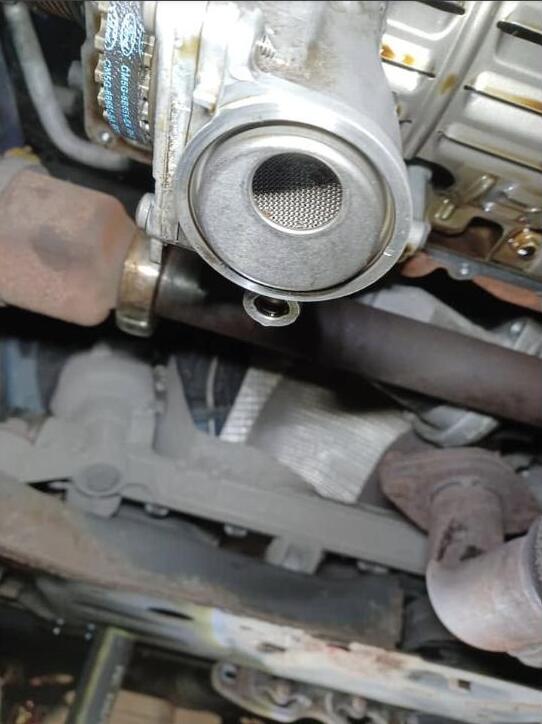
The oil pickup pipe removed and held up to the camera, its fine mesh strainer clean and clear, with the exhaust and subframe behind it.
The oil pickup out and cleaned. This is the part a shedding wet belt eventually blocks, and it is the reason the sump comes off on this job.
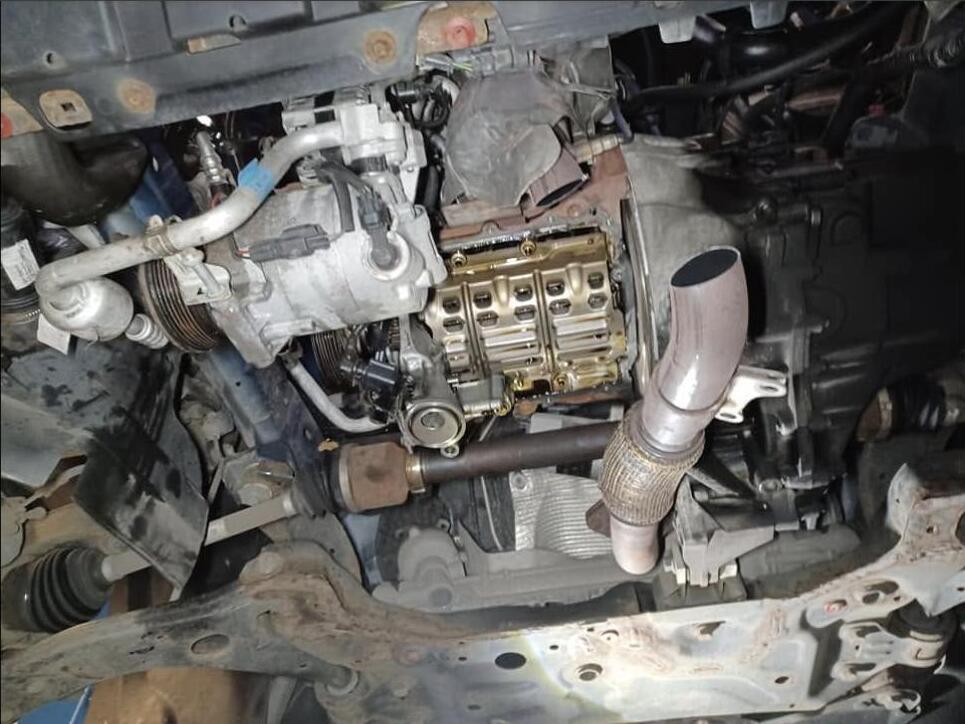
Wide view of the underside of the car with the sump removed, showing the exposed oil pump and baffle, the driveshaft, the exhaust downpipe and the subframe.
Sump off, so what came out of the belt can be seen and cleaned out rather than left in there.
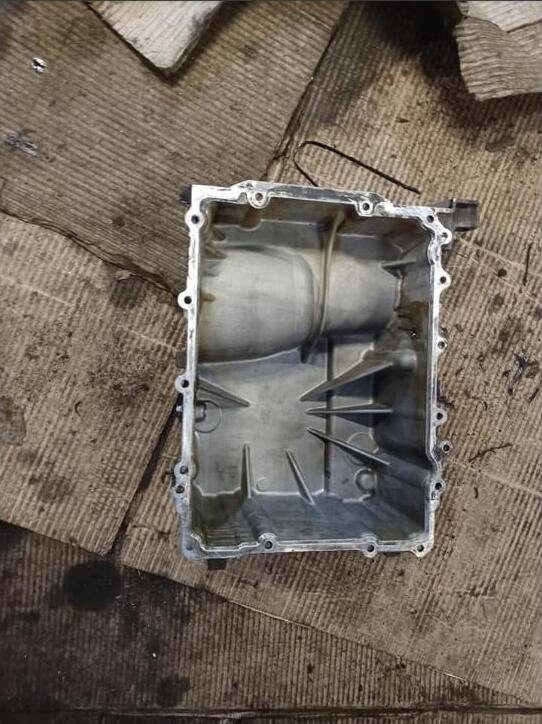
The aluminium sump pan removed from the car and photographed on the floor, cleaned out, its internal baffles and bolt holes visible.
The sump, cleaned, ready to go back on.

One job, one car, one weekend

Photographed as it went and posted with the caption "Another ford focus ecoboost wet timing belt done this weekend." Same engine family, same job, if yours is due.

The original post on Facebook

Got a belt due?

Ring with the registration and you will be told what interval yours is on and what the job involves on that engine.